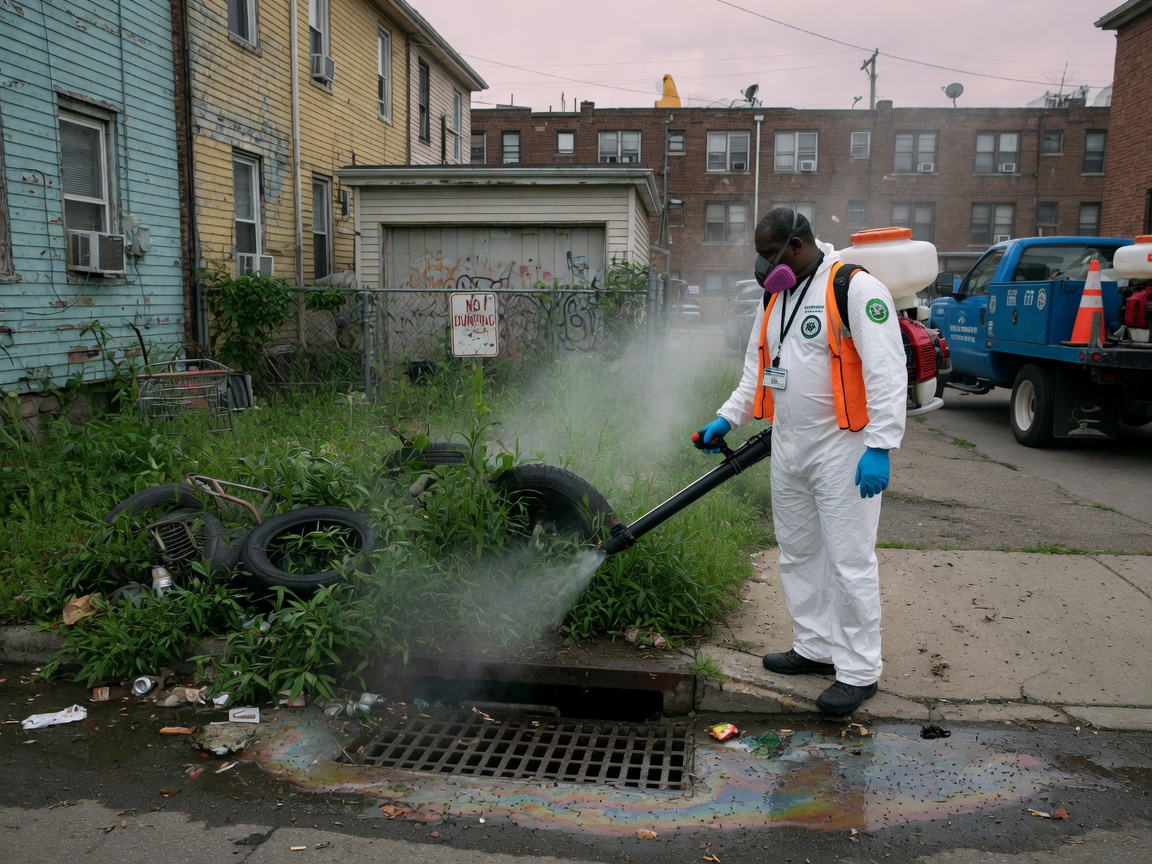
Detroit summers bring consistent mosquito pressure near Belle Isle Park, the Detroit River and neighborhoods with older housing stock such as Boston-Edison and Woodbridge. Many homes built before 1950 have cracked foundations, clogged gutters and low spots that hold water long after rain, creating breeding sites that standard sprays miss. We map these locations during the initial visit and treat both adult mosquitoes and larvae before they hatch.
Warm temperatures from June through September allow multiple generations in a single season, especially in areas like Palmer Park and Eastern Market where irrigation and drainage patterns differ from newer suburbs. We use EPA-registered larvicides in standing water and apply residual barrier treatments to vegetation and siding without affecting pets or children once dry. Follow-up visits are scheduled around the four-season weather shifts so spring and fall applications prevent carry-over into the next warm period.
Properties near Hamtramck and Dearborn often share drainage lines with neighboring lots, so we coordinate treatments across property lines when needed. This prevents re-infestation from untreated yards while staying compliant with Wayne County health guidelines on pesticide use near waterways.
Homeowners in Midtown and Corktown frequently see mosquitoes entering through basement windows and porch screens. We seal obvious entry points during service and recommend simple exclusion steps that match the construction style of these historic blocks.
Technician insight
In Detroit the thing that catches most people out with Mosquito Control is the sheer number of hidden water traps in 80- to 100-year-old brick homes in Boston-Edison and Woodbridge, where clay soil and settled foundations keep small pockets wet long after the rest of the yard dries.
Corktown yard with persistent evening mosquitoes
A homeowner near Eastern Market reported heavy biting at dusk despite using store sprays. We found larvae in a cracked downspout basin and low corner behind the garage typical of older lots. Larvicide and a perimeter barrier reduced activity within two days and the follow-up visit kept counts low through the rest of the summer.
Mosquito Control Services We Offer
✓Residential Mosquito Barrier Spray
Applies residual treatment to vegetation, fences and home exteriors in neighborhoods like Indian Village and Mexicantown to reduce adult mosquitoes for up to 21 days.
✓Larval Source Reduction
Locates and treats standing water in gutters, foundation cracks and yard depressions common in pre-war homes across Boston-Edison and Woodbridge.
✓Yard Fogging Service
Covers larger lots near Belle Isle Park or Campus Martius Park with a fine mist that knocks down active mosquitoes during peak evening hours.
✓Seasonal Mosquito Program
Schedules three to five visits from May through September to match Detroit's warm-weather breeding cycles and keep counts low around Eastern Market properties.
✓Commercial Mosquito Control
Treats outdoor seating and perimeter areas for businesses in Midtown and Corktown without disrupting daytime operations.
Mosquito Control Cost in Detroit, MI
| Service | Typical Range | What Affects It |
|---|---|---|
| Initial inspection and map | Free | Includes breeding-site report for any Detroit address. |
| Single barrier treatment | $175–$325 | Varies with yard size and access in older neighborhoods. |
| Larval reduction add-on | $75–$150 | Added when multiple water sources are found. |
| Seasonal program (4 visits) | $550–$850 | Covers May through September for most Wayne County homes. |
Ranges are typical for Detroit, MI and confirmed with an exact written quote before any work starts.
How it works
- 1
Site Inspection
Walk the property to identify breeding sites around older Detroit homes, noting gutters, low spots and nearby water sources.
- 2
Larval Treatment
Apply targeted larvicide to standing water that cannot be eliminated, focusing on areas typical in Wayne County lots.
- 3
Barrier Application
Treat vegetation and structures with residual product rated for local mosquito species and summer humidity.
- 4
Follow-Up Visit
Return within 14–21 days to check results and re-treat high-pressure zones near parks or drainage lines.
Pricing
Pricing depends on lot size, number of breeding sites and whether multiple visits are needed.