
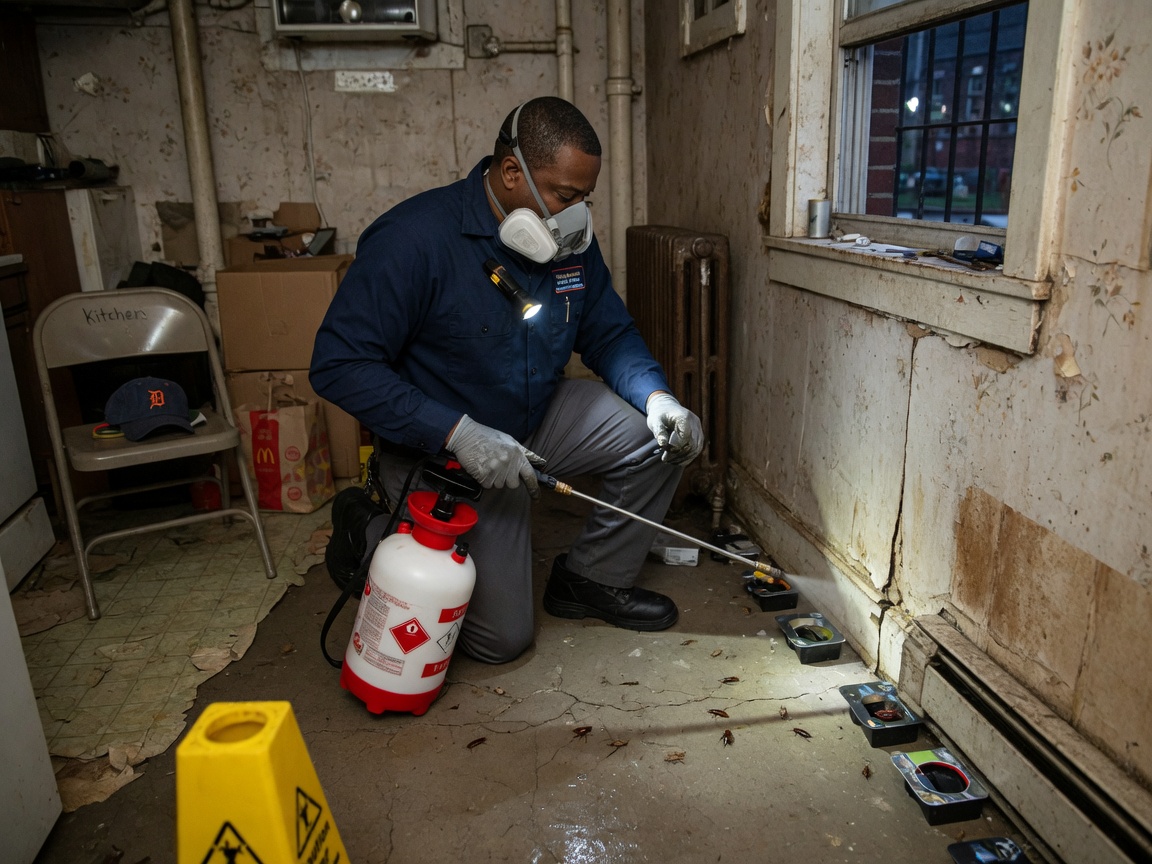
Detroit's older brick and frame homes in neighborhoods like Boston-Edison, Woodbridge, and Indian Village often feature cracked foundations and outdated plumbing that create hidden harborage points for German and American cockroaches. These structures, common throughout Wayne County, allow roaches to move between units and survive cold snowy winters by staying indoors where warm summers provide ideal breeding conditions. Treatments must account for shared walls in multi-family buildings near Hamtramck and Dearborn, where gel baits and targeted dust applications reach voids without broad spraying that could affect neighboring units.
Seasonal shifts in Detroit create specific challenges. Once winter temperatures drop, roaches concentrate in heated basements and kitchens near Eastern Market and Palmer Park, while spring thaws increase moisture that draws them into living areas. Technicians inspect for entry points around utility lines and sewer connections common in these areas, then apply low-impact materials that remain effective through warm summer months when populations rebound. Follow-up visits focus on monitoring stations placed in high-traffic zones like those near Comerica Park and Campus Martius Park commercial properties.
Edge cases arise in historic districts such as Corktown and Mexicantown where renovation work disturbs established nests. In these situations, crews combine perimeter barriers with interior void treatments while coordinating with property owners to avoid disrupting daily operations at nearby landmarks like the Detroit Institute of Arts or Motown Museum. All work follows Michigan pest management guidelines for multi-use buildings, emphasizing inspection of food storage areas and waste systems that sustain infestations year-round.
Technician insight
In Detroit, the thing that catches most people out with Cockroach Control is how the brick foundations and steam tunnels in Boston-Edison and Woodbridge homes stay warm enough through snowy winters to let German roaches keep breeding when homeowners think the cold has solved the problem.
Corktown Restaurant Kitchen
A Corktown restaurant noticed roaches near the dish pit after a warm spell. Inspection revealed nesting in floor drains connected to the old sewer line. We applied gel bait along the line and sealed voids around the prep area. Follow-up visits showed zero activity within two weeks.
Cockroach Control Services We Offer
✓German Cockroach Treatments
Targeted gel bait and growth regulator applications for the fast-breeding German cockroaches common in Detroit apartment kitchens and restaurant spaces.
✓American Cockroach Extermination
Perimeter and sewer line treatments to eliminate larger American cockroaches that enter Wayne County basements during warm summer months.
✓Commercial Kitchen Cockroach Control
Sanitation audits and low-odor bait programs for food service businesses near Eastern Market and Midtown that must stay operational.
✓Multi-Unit Building Inspections
Unit-by-unit assessments and shared-wall treatments for apartment complexes in Woodbridge and Hamtramck to stop cross-unit migration.
✓Moisture-Related Cockroach Prevention
Identification and sealing of damp entry points in older Detroit homes where four-season weather creates year-round breeding conditions.
Cockroach Control Cost in Detroit, MI
| Service | Typical Range | What Affects It |
|---|---|---|
| Single-family home initial treatment | $175–$325 | Depends on square footage and whether German or American species are present |
| Multi-unit building per unit | $85–$150 | Lower per-unit cost when multiple units are treated together |
| Commercial kitchen service | $250–$450 | Includes sanitation review and after-hours scheduling near Eastern Market |
| Quarterly maintenance program | $120–$200 per visit | For properties with recurring issues in older Wayne County housing |
Ranges are typical for Detroit, MI and confirmed with an exact written quote before any work starts.
How it works
- 1
Detailed Property Inspection
Technicians examine kitchens, basements, and utility voids in Detroit homes, noting harborage in older plumbing common to Wayne County neighborhoods.
- 2
Custom Treatment Plan
Selection of baits, dusts, and growth regulators matched to the species and building type found during the initial walk-through.
- 3
Application and Sealing
Precise placement of materials in cracks and voids followed by recommendations for sealing entry points around pipes and foundations.
- 4
Follow-Up Monitoring
Scheduled return visits to check stations and adjust treatments based on activity levels observed in the specific Detroit micro-climate.
Pricing
Pricing varies by property size, infestation level, and number of units; most Detroit residential jobs fall in the mid-range for initial service plus follow-ups.